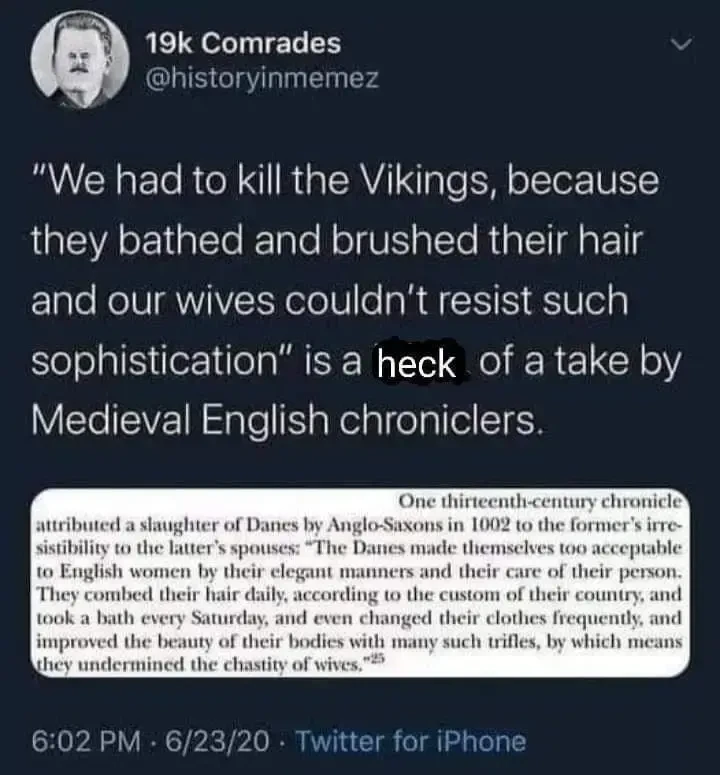
Worth noting that a 13th century chronicler is unlikely to have seen the Anglo Saxons as “us” as “we” by that time would be the Normans (for people that could read and write at least).
It’s generally agreed that the actual cause of the St. Brice’s Day Massacre was revenge for a series of raids the year before.
13th century English writers would have been more distinctly Norman in outlook, but the writer is not making a distinction between the English in the 11th century and the English in the 13th century. The idea of the Normans as a separate ruling caste died pretty quickly by intermarriage with the Anglo native nobility, even though French remained the dominant non-Latin language amongst the educated.
That being said, you’re correct about the causes of the massacre generally agreed to be deeper. It’s just a funny note that an English chronicler found these traits to be so offensive as to justify such a reaction.

Worth noting that a 13th century chronicler is unlikely to have seen the Anglo Saxons as “us” as “we” by that time would be the Normans (for people that could read and write at least).
It’s generally agreed that the actual cause of the St. Brice’s Day Massacre was revenge for a series of raids the year before.
13th century English writers would have been more distinctly Norman in outlook, but the writer is not making a distinction between the English in the 11th century and the English in the 13th century. The idea of the Normans as a separate ruling caste died pretty quickly by intermarriage with the Anglo native nobility, even though French remained the dominant non-Latin language amongst the educated.
That being said, you’re correct about the causes of the massacre generally agreed to be deeper. It’s just a funny note that an English chronicler found these traits to be so offensive as to justify such a reaction.