OK, so i really need to preface this with the fact that this is a genuine question, my knowledge of political ideologies and their naming schemes is basically “things i heard in passing on the internet”.
Also apologies if it’s a joke that i’ve /whooshed on.
What is the difference between the type of democratic socialist you are and a social democrat.
The reason i ask is that the only other social democrat (or democratic socialist, assuming there isn’t a difference) political ideology I’ve heard of was the precursor to the nazi’s.
It’s really not a dig, i’m interested in the answer.
See: Democratic Socialists of America (DSA), Bernie Sanders, Zohran Mamdani, Alexandria Ocasio Cortez(AOC), or other progressive democrats or independents.
That video isn’t loading for me.
As far as I know, yes they are similar. (social democrat to democratic socialist)
I guess the difference is inclusivity. And if we’re talking a Party or ideology(capitalization matters, like I’m a democrat, but not a Democrat.)
Unlike Nazis, I’m for inclusivity. Come as you are, all faiths welcome.
But I also personally detest body mutilation. Even when they want it. Yea, all forms. So tattoos, piercings, gauges, split tongues, etc. but to be clear: I don’t think it should be illegal for adults to ‘mutilate themselves’, voluntarily. It’s just not for me. It’s a gut feeling kind of thing.
I think maybe, psychologically, it’s because it is seeking external validation. To “pass” as the kids say. I don’t think people should need to “pass”… You’re good as your are. I don’t think you’re going to improve on God’s design.
See: Democratic Socialists of America (DSA), Bernie Sanders, Zohran Mamdani, Alexandria Ocasio Cortez(AOC), or other progressive democrats or independents.
As far as I know, yes they are similar. (social democrat to democratic socialist)
I guess the difference is inclusivity. And if we’re talking a Party or ideology(capitalization matters, like I’m a democrat, but not a Democrat.)
Unlike Nazis, I’m for inclusivity. Come as you are, all faiths welcome.
Useful and mostly answers my question, thanks.
But I also personally detest body mutilation. Even when they want it. Yea, all forms. So tattoos, piercings, gauges, split tongues, etc. but to be clear: I don’t think it should be illegal for adults to ‘mutilate themselves’, voluntarily. It’s just not for me. It’s a gut feeling kind of thing.
Fair enough.
I think maybe, psychologically, it’s because it is seeking external validation. To “pass” as the kids say. I don’t think people should need to “pass”… You’re good as your are.
You lost me at this bit though, by that rationale anything external that isn’t strictly functional would fall under this category.
Coloured clothes, haircuts that aren’t just to keep the hair out of your eyes, any accessories of any kind ?
It also feels like a big leap to claim external validation as the only reason for personal expression.
That being said, as long as you aren’t forcing it on other people, you do you, personal choice is important.
I don’t think you’re going to improve on God’s design.
I’m going to be honest, I don’t like this way of thinking, at all.
I’m all for personal faith, but the problems with that statement aren’t theistic in nature, they’re logical.
The only way that statement works is if it’s absolute. If God’s design is perfect it has to be “perfect”.
If any part of the design is questionable then it’s all questionable.
I take that back, you could argue that we can’t improve upon gods design in just the areas we are talking about (body mods) but then i’d follow up: with why can we not improve upon body-mod related areas, but we can on something like vision for instance?
Easy go-to examples are everywhere
Spectacles being a prime example.
Wheelchairs, or any mobility aid really.
Hearing aids, inhalers.
The most contextually relevant example i can think of is a cleft lip, something that you could live a full life with but would be significantly better off without.
I believe you’re responding to an argument I didn’t quite make.
I wasn’t saying “any external change = validation.” I was talking specifically about physiological body modification done to fit in or ‘pass’ … that’s a much narrower category than general self-expression via…
Clothes, hairstyles, accessories, etc. aren’t comparable. Those are temporary, low-stakes, and reversible. I’m talking about chronic physical changes to the body.
And even then, I didn’t claim external validation is the only reason, but just that it’s a common psychological driver in some cases.
So no, the logic doesn’t expand to “everything non-functional.” That’s a mischaracterization.
On the “God’s design” point, you’re also stretching it into areas I wasn’t talking about. Medical interventions like glasses, mobility aids, or corrective surgery (like cleft lip repair) are about restoring function or alleviating harm.
My counter would be the opposite. And this is really the core. If cleft lips became a fad and people willingly cleft their own lips when they were normal before. That’s insane, IMO. That’s jumping off the cliff because Bobby Jones did.
If you want to challenge the position, that’s fine, but it should be the position I actually stated, not a broader version of it.
I believe you’re responding to an argument I didn’t quite make.
I wasn’t saying “any external change = validation.” I was talking specifically about physiological body modification done to fit in or ‘pass’ … that’s a much narrower category than general self-expression via…
Ah, that’s my bad, i read it as all body mods are external validation driven.
Clothes, hairstyles, accessories, etc. aren’t comparable. Those are temporary, low-stakes, and reversible. I’m talking about chronic physical changes to the body.
Stakes are relative in this case, just because you care about the permanence or reversibility of a modification doesn’t mean others do.
but yeah, it’s not an exact match.
And even then, I didn’t claim external validation is the only reason, but just that it’s a common psychological driver in some cases. So no, the logic doesn’t expand to “everything non-functional.” That’s a mischaracterization.
see above
On the “God’s design” point, you’re also stretching it into areas I wasn’t talking about. Medical interventions like glasses, mobility aids, or corrective surgery (like cleft lip repair) are about restoring function or alleviating harm.
This we’ll have to disagree on, unless you have a convincing way of explaining why we can’t improve on gods design with stylistic choices, but medical intervention is ok.
I realise how that sounds (to me at least) but your phrasing didn’t leave any leeway in that it didn’t really specify what about gods design could possibly be improved upon.
It also gets into conversation about what exactly constitutes harm, psychological harm exists and can be just as devastating as physical harm.
Not to mention that psychological harm can cause physical harm, i don’t mean self-harm (though that’s a thing also) i mean detrimental physiological changes brought about by negative psychological pressure.
My counter would be the opposite. And this is really the core. If cleft lips became a fad and people willingly cleft their own lips when they were normal before. That’s insane, IMO. That’s jumping off the cliff because Bobby Jones did.
My answer to this would be contingent upon your answer to “what about god’s design is possible for us to improve upon?”.
If you want to challenge the position, that’s fine, but it should be the position I actually stated, not a broader version of it.
That’s fair, though as i said your position was unclear in that the statement seems to be an absolute with no specification as to boundaries.
I did go back and adjust my statement to ask a question around boundaries in the original reply, I’m not sure if you replied before or after this.
If you don’t mind giving me some clarification on where those boundaries exist i can be more specific.
The “God’s design” line wasn’t meant as a literal argument! Lol. It was more rhetorical shorthand, and yeah, a bit tongue-in-cheek(I’m atheist).
The actual point I care about isn’t at all theological, it’s about where we draw the line between restoring function and altering a healthy body for social or aesthetic reasons.
The “God’s design” line wasn’t meant as a literal argument! Lol.
That’s a very poor choice of phrase for a conversation with no cues outside of text.
And you’ve managed to go through my entire previous reply without mentioning that you didn’t actually mean it, which is additionally confusing.
So i’ll assume function restoration and harm reduction are the line for you, now i can answer the statement i skipped.
My counter would be the opposite. And this is really the core. If cleft lips became a fad and people willingly cleft their own lips when they were normal before. That’s insane, IMO. That’s jumping off the cliff because Bobby Jones did.
I wasn’t comparing cleft lip restoration to tattoos, piercings or split tongues because that’s a terrible comparison, one is functionally restorative and the others are aesthetic aside from the split tongue which is also functionally additive.
I was using it as an example as to why “god’s design” is a poor argument.
As it seems “god’s design” wasn’t an actual argument you were making, this is less relevant.
I would point you back to my arguments about psychological harm reduction in it’s many forms, some of which are societal in nature (fitting in, for example).
I’m not advocating for caving to peer pressure against someone’s will, I’m saying that voluntary personal choices that include societal considerations can contribute to a foundation of long term psychological harm reduction.
In simpler terms, finding your people and fitting in can help you feel better both mentally and physically.
As you’ve stated you’re not forcing your opinion on others, we can agree to disagree on where the lines are with no real consequences.
Might be worth considering that not all harm is physical or immediate, when assessing what constitutes harm reduction.
It just wasn’t meant literally. Again, it’s rhetorical. That’s still an argument…
It’s not a great argument if taken literally but that’s also why it was chosen, the ambiguity is a feature, not a bug. Indeed, there are endless gods, and which one I may have been referring to absolutely isn’t relevant(I’m not making a theological argument.) When you understand that, it becomes a stronger argument.
I’m essentially arguing that people should embrace their nature rather than deny it or subvert it.
Replace god with nature, basically.
If you need to pave paradise and put up a parking lot to fit in, I guess you’ll have your reward? But it’ll also be your undoing.
It just wasn’t meant literally. Again, it’s rhetorical. That’s still an argument…
Not a good one, but sure, technically.
It’s not a great argument if taken literally but that’s also why it was chosen, the ambiguity is a feature, not a bug. Indeed, there are endless gods, and which one I may have been referring to absolutely isn’t relevant(I’m not making a theological argument.) When you understand that, it becomes a stronger argument.
It does not, ambiguity over an already unclear position does not make for a strong argument.
It took us 3 back and forths for you to actually explain what you meant.
You used a small phrase with no supporting context to imply it wasn’t meant to be taken literally.
I’m essentially arguing that people should embrace their nature rather than deny it or subvert it.
That’s also a poor argument in it’s ambiguity , “embrace their nature” is almost as hand-wavy as “gods design”, though it falls down for a different reason.
Replace god with nature, basically.
You’d have to work hard to pick a more subjective benchmark than “nature”, there are tribes and cultures who think/thought foot binding was natural, human sacrifice, tribal marking, scarification, FGM, MGM (circumcision), head binding and basically any other cultural practice you’d care to mention.
If you need to pave paradise and put up a parking lot to fit in, I guess you’ll have your reward? But it’ll also be your undoing.
That makes even less sense than “natural”.
It also addresses none of the points raised.
Honestly i think this is on me at this point, you did say right at the beginning you worked from a “gut feeling” it’s my bad for trying to get you to formalise that.
You have your boundaries, they seem arbitrary and nonsensical to me, but they don’t have to make sense to me because I’m not using them.


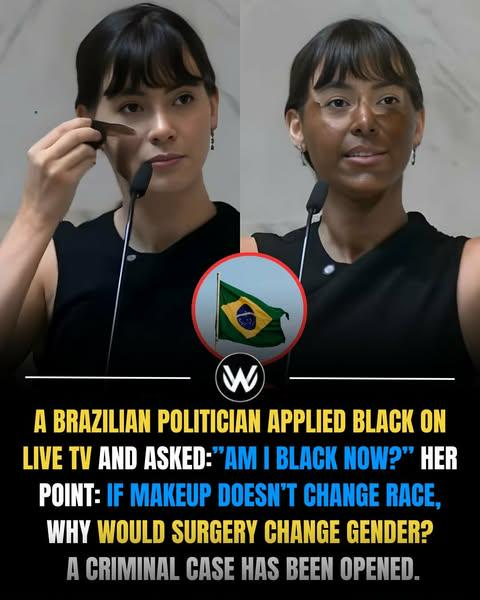
OK, so i really need to preface this with the fact that this is a genuine question, my knowledge of political ideologies and their naming schemes is basically “things i heard in passing on the internet”.
Also apologies if it’s a joke that i’ve /whooshed on.
What is the difference between the type of democratic socialist you are and a social democrat.
Is it a Peoples Front Of Judea type of thing ? or is there a legitimate difference?
The reason i ask is that the only other social democrat (or democratic socialist, assuming there isn’t a difference) political ideology I’ve heard of was the precursor to the nazi’s.
It’s really not a dig, i’m interested in the answer.
See: Democratic Socialists of America (DSA), Bernie Sanders, Zohran Mamdani, Alexandria Ocasio Cortez(AOC), or other progressive democrats or independents.
That video isn’t loading for me.
As far as I know, yes they are similar. (social democrat to democratic socialist)
I guess the difference is inclusivity. And if we’re talking a Party or ideology(capitalization matters, like I’m a democrat, but not a Democrat.)
Unlike Nazis, I’m for inclusivity. Come as you are, all faiths welcome.
But I also personally detest body mutilation. Even when they want it. Yea, all forms. So tattoos, piercings, gauges, split tongues, etc. but to be clear: I don’t think it should be illegal for adults to ‘mutilate themselves’, voluntarily. It’s just not for me. It’s a gut feeling kind of thing.
I think maybe, psychologically, it’s because it is seeking external validation. To “pass” as the kids say. I don’t think people should need to “pass”… You’re good as your are. I don’t think you’re going to improve on God’s design.
Useful and mostly answers my question, thanks.
Fair enough.
You lost me at this bit though, by that rationale anything external that isn’t strictly functional would fall under this category.
Coloured clothes, haircuts that aren’t just to keep the hair out of your eyes, any accessories of any kind ?
It also feels like a big leap to claim external validation as the only reason for personal expression.
That being said, as long as you aren’t forcing it on other people, you do you, personal choice is important.
I’m going to be honest, I don’t like this way of thinking, at all.
I’m all for personal faith, but the problems with that statement aren’t theistic in nature, they’re logical.
The only way that statement works is if it’s absolute. If God’s design is perfect it has to be “perfect”.If any part of the design is questionable then it’s all questionable.I take that back, you could argue that we can’t improve upon gods design in just the areas we are talking about (body mods) but then i’d follow up: with why can we not improve upon body-mod related areas, but we can on something like vision for instance?
Easy go-to examples are everywhere
The most contextually relevant example i can think of is a cleft lip, something that you could live a full life with but would be significantly better off without.
I believe you’re responding to an argument I didn’t quite make.
I wasn’t saying “any external change = validation.” I was talking specifically about physiological body modification done to fit in or ‘pass’ … that’s a much narrower category than general self-expression via…
Clothes, hairstyles, accessories, etc. aren’t comparable. Those are temporary, low-stakes, and reversible. I’m talking about chronic physical changes to the body.
And even then, I didn’t claim external validation is the only reason, but just that it’s a common psychological driver in some cases. So no, the logic doesn’t expand to “everything non-functional.” That’s a mischaracterization.
On the “God’s design” point, you’re also stretching it into areas I wasn’t talking about. Medical interventions like glasses, mobility aids, or corrective surgery (like cleft lip repair) are about restoring function or alleviating harm.
My counter would be the opposite. And this is really the core. If cleft lips became a fad and people willingly cleft their own lips when they were normal before. That’s insane, IMO. That’s jumping off the cliff because Bobby Jones did.
If you want to challenge the position, that’s fine, but it should be the position I actually stated, not a broader version of it.
Ah, that’s my bad, i read it as all body mods are external validation driven.
Stakes are relative in this case, just because you care about the permanence or reversibility of a modification doesn’t mean others do.
but yeah, it’s not an exact match.
see above
This we’ll have to disagree on, unless you have a convincing way of explaining why we can’t improve on gods design with stylistic choices, but medical intervention is ok.
I realise how that sounds (to me at least) but your phrasing didn’t leave any leeway in that it didn’t really specify what about gods design could possibly be improved upon.
It also gets into conversation about what exactly constitutes harm, psychological harm exists and can be just as devastating as physical harm.
Not to mention that psychological harm can cause physical harm, i don’t mean self-harm (though that’s a thing also) i mean detrimental physiological changes brought about by negative psychological pressure.
My answer to this would be contingent upon your answer to “what about god’s design is possible for us to improve upon?”.
That’s fair, though as i said your position was unclear in that the statement seems to be an absolute with no specification as to boundaries.
I did go back and adjust my statement to ask a question around boundaries in the original reply, I’m not sure if you replied before or after this.
If you don’t mind giving me some clarification on where those boundaries exist i can be more specific.
The “God’s design” line wasn’t meant as a literal argument! Lol. It was more rhetorical shorthand, and yeah, a bit tongue-in-cheek(I’m atheist). The actual point I care about isn’t at all theological, it’s about where we draw the line between restoring function and altering a healthy body for social or aesthetic reasons.
That’s my boundary.
That’s a very poor choice of phrase for a conversation with no cues outside of text.
And you’ve managed to go through my entire previous reply without mentioning that you didn’t actually mean it, which is additionally confusing.
So i’ll assume function restoration and harm reduction are the line for you, now i can answer the statement i skipped.
I wasn’t comparing cleft lip restoration to tattoos, piercings or split tongues because that’s a terrible comparison, one is functionally restorative and the others are aesthetic aside from the split tongue which is also functionally additive.
I was using it as an example as to why “god’s design” is a poor argument.
As it seems “god’s design” wasn’t an actual argument you were making, this is less relevant.
I would point you back to my arguments about psychological harm reduction in it’s many forms, some of which are societal in nature (fitting in, for example).
I’m not advocating for caving to peer pressure against someone’s will, I’m saying that voluntary personal choices that include societal considerations can contribute to a foundation of long term psychological harm reduction.
In simpler terms, finding your people and fitting in can help you feel better both mentally and physically.
As you’ve stated you’re not forcing your opinion on others, we can agree to disagree on where the lines are with no real consequences.
Might be worth considering that not all harm is physical or immediate, when assessing what constitutes harm reduction.
It just wasn’t meant literally. Again, it’s rhetorical. That’s still an argument…
It’s not a great argument if taken literally but that’s also why it was chosen, the ambiguity is a feature, not a bug. Indeed, there are endless gods, and which one I may have been referring to absolutely isn’t relevant(I’m not making a theological argument.) When you understand that, it becomes a stronger argument.
I’m essentially arguing that people should embrace their nature rather than deny it or subvert it.
Replace god with nature, basically.
If you need to pave paradise and put up a parking lot to fit in, I guess you’ll have your reward? But it’ll also be your undoing.
Not a good one, but sure, technically.
It does not, ambiguity over an already unclear position does not make for a strong argument.
It took us 3 back and forths for you to actually explain what you meant.
You used a small phrase with no supporting context to imply it wasn’t meant to be taken literally.
That’s also a poor argument in it’s ambiguity , “embrace their nature” is almost as hand-wavy as “gods design”, though it falls down for a different reason.
You’d have to work hard to pick a more subjective benchmark than “nature”, there are tribes and cultures who think/thought foot binding was natural, human sacrifice, tribal marking, scarification, FGM, MGM (circumcision), head binding and basically any other cultural practice you’d care to mention.
That makes even less sense than “natural”.
It also addresses none of the points raised.
Honestly i think this is on me at this point, you did say right at the beginning you worked from a “gut feeling” it’s my bad for trying to get you to formalise that.
You have your boundaries, they seem arbitrary and nonsensical to me, but they don’t have to make sense to me because I’m not using them.
Thanks for the back and forth anyway.