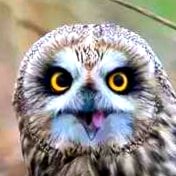

This Great Horned Owl was found on the roadside showing neurological symptoms, likely from a vehicle collision. He’s responding well to treatment. In this photo he is receiving fluids and electrolytes, with solid foods to be introduced as he continues to heal.
Great Horned Owls are crepuscular and nocturnal, meaning they are most active at dawn, dusk, and night. Unfortunately, that is also when visibility is lowest for drivers. The vibrations of vehicles can often stir up small prey along roadsides, drawing owls and other wildlife dangerously close to traffic.
To help keep both you and wildlife safe:
-Slow down at dawn and dusk
-Stay alert for movement along the road’s edge
-Use high beams when safe to increase visibility
-Avoid throwing food scraps from vehicles, which attract prey (and predators) to roadsides
Every small action can make a big difference for wildlife.

Poor thing looks pretty out of it.
It’s got to be a stressful experience, even though it’s for their benefit. Poor bird. 😔
Tube feeding the owl gets the liquid down the esophagus safely. The tongue has the glottis, the opening to the trachea and lungs, so care needs to be taken that nothing ends up going down there. Using the tube to get well past that helps keep the bird safe.

Aw, poor Dizzy Dean! Get better fella!
I always feel bad when I have to force a critter to eat. I have to imagine at least owls shouldn’t have much/any gag reflex, given how they eat food whole generally.
It’s sometimes step one to getting back to health though, so I just try to keep them as relaxed as I can.
This has meme potential…


These could help…

