
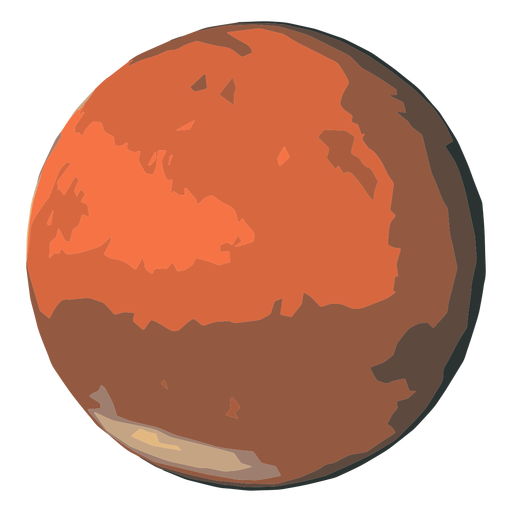
The composition of the atmosphere is one of the most significant long-term changes that human settlement brings to a planet. A thicker atmosphere rich in oxygen leads to a stabler day-night-temperature, but also provides oxygen for plants and animals to thrive outside of shielded habitats, on the bare surface. On top of that, in increases the total pressure of the atmosphere, making liquid water on the surface possible.
If CO2 from the martian atmosphere is reduced and turned into O2 (the carbon could be stuck in plants or plastics, deposited in landfills), then new CO2 would evaporate from the poles to refill what was lost, because the solid CO2 from the poles is in balance with the gaseous CO2 of the atmosphere. But the atmosphere would still be enriched in O2, so the total atmospheric pressure would increase.
Assuming that martian settlers will emit O2 instead of CO2 at a similar rate, it would take roughly 286 000 years to reach an atmospheric pressure of 1 bar (what we have on Earth today) on Mars.
You must log in or # to comment.
As long as we can’t figure out the magnetosphere it will never happen.
Infinite, as we really haven’t a clue how to do it.
We have some ideas, but that’s about it.
Hundreds, if not thousands of years. The main issue is the lack of a strong magnetic field to keep whatever atmosphere you generate around the planet. So you can either continually produce whatever gasses you need, or you can get the core spinning faster. Precisely one of those two options is close to being realistic.
But then you gotta worry about how to generate whatever gasses you need. Mainly nitrogen, with O2 as secondary. Sure, greenhouses can do it, but that takes a lot more liquid water than is currently accessible on Mars.
One idea to kinda set the ball rolling is to deorbit Deimos and have it impact the ice cap on the North Pole. Doing so would be tremendously difficult, but would potentially kill two birds with one stone. First, by heating up and ejecting all of that water ice into the atmosphere, that both thickens the air and raises the air pressure. It’d also heat up the planet. All things good for keeping liquid water… well, liquid.
The downsides are, well, we’d be deorbiting a damn moon. We’ve never done this. We likely never will. It’s a monumental task on the best of days. Expensive as hell, and we don’t even know for sure if it’d do anything we intend.
The best idea for Mars is to seal off and live in old lava tubes. Built-in radiation protection, and more stable temperatures. Easier to keep pressurized and a much smaller area to oxygenate. We’d have to use hydroponics for crops but we’ve been doing that in space anyway so it’s a matter of scaling that up. Ideally, infrastructure to mine water ice would speed that along.
Martian soil sucks for crops en masse. The perchlorates in the soil are toxic to life in general, and the heavy metal content isn’t great either. However, if we could clean and filter it somehow we’d be able to use it. We’d also have to add nutrients needed for plants but that’s on the easier side. I would imagine growing the ‘three sisters’ (beans, corn, and squash) as that combination produces a lot of food and keeps the soil extremely healthy.
But at the end of the day, it’s all ideas. None of it matters until we can prove we can get people there safely. I would imagine that the Artemis moon base will be doing a great deal of experiments to study if we can even deal with being in a cramped hab eating crappy food in low gravity for years at a time is viable.