In which way does electric lighting affect sleep? If you turn the lights off, no current flows so there’s not even any slight EM radiation to worry about. It’s just inert materials at that point, isn’t it?
If you turn the lights off, no current flows so there’s not even any slight EM radiation to worry about. It’s just inert materials at that point, isn’t it?
Now that you brought up EM radiation, let me tell you what has been hidden from you:
Detailed discourse on the hazards of EMF, and a chance to buy my unique solution.
Nah. I’m just fucking with you. Not everyone on the Internet is nuts - only most of us.
But when light bulbs were invented, they were incandescent and much redder and dimmer. If you burn them too hot, the filaments would melt. Therefore there wasn’t much blue light if any released by early light bulbs
But electric lights would still have imitated daylight better than candles or gas lights, and human biology responds to what time of day or perceives itself to be in.
You use your electric lights to help counteract all that electric light exposure you get all day?
I mean, it’s not the electricity that is the problem, it’s just the total light level.
The human brain and eyeball take all kinds of sleep readiness cues from the amount of light in the environment.
I use some dimmer switches, and some lamps with low-lumen bulbs installed.
Sometimes I set up I timers to make the brighter lights turn off and the softwer ones turn on, as my bedtime approahes.
Most phones will also automatically adjust their screen to match the light level in a room, so addressing the room lighting also helps address the light being output by the phone screen. PCs need more help.
Linux Mint has a nice option to adjust monitor brightness and hue based on local time of day.
We also now know that the amount of blue light specifically influences sleep patterns more than other spectrums of light, so I have filters on my laptops and phones that change the screen hue toward orange after certain hours in the evening.
Back when my phone was too stupid to adjust it’s own light level, a blue light blocker made a huge difference. Now I don’t notice it as much - probably because the phone puts out far less total light, in the evening. But I figure a blue light filter doesn’t hurt, even if it isn’t doing as much as it used to.
Oh I agree with everything you’re saying here. I use the night mode on my phone AND in Linux Mint!
I’ve done RGB light bulbs in the past to set them to more orange/red colors at night, but now i’ve switched to 2700K bulbs with high CRI/TM-30 ratings that I can just dim way down and selectively turn off.

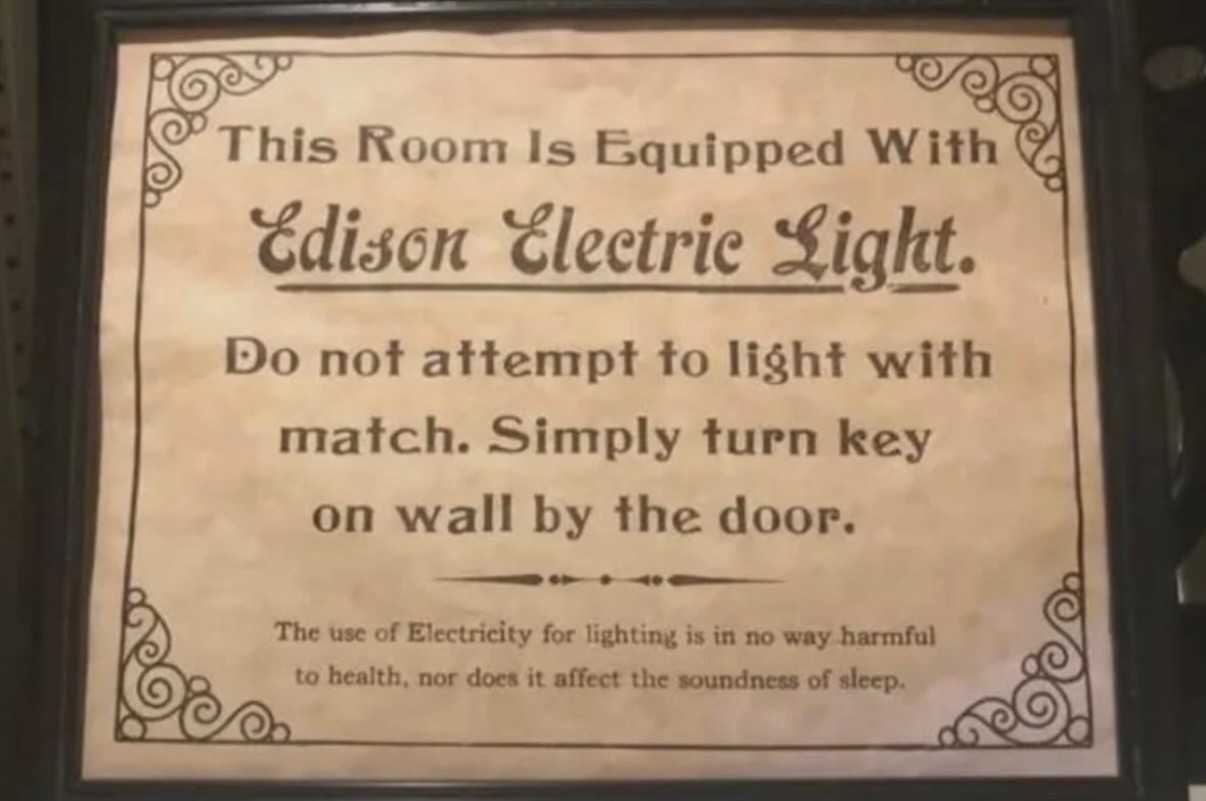
It’s fun to see earlier examples of corporate gaslighting.
That thing you experienced? You didn’t.
imagine a world where if you fell asleep with the “light” on, you would burn alive.
that was the reality of a world before electric lights.
In which way does electric lighting affect sleep? If you turn the lights off, no current flows so there’s not even any slight EM radiation to worry about. It’s just inert materials at that point, isn’t it?
Now that you brought up EM radiation, let me tell you what has been hidden from you:
Detailed discourse on the hazards of EMF, and a chance to buy my unique solution.
Nah. I’m just fucking with you. Not everyone on the Internet is nuts - only most of us.
Exposure to blue light affects sleep rhythm.
But when light bulbs were invented, they were incandescent and much redder and dimmer. If you burn them too hot, the filaments would melt. Therefore there wasn’t much blue light if any released by early light bulbs
Indeed.
But electric lights would still have imitated daylight better than candles or gas lights, and human biology responds to what time of day or perceives itself to be in.
Viridian Dynamics: Our products do not affect the soundness of sleep. No they don’t. No.
What exactly was experienced here?
Having trouble getting to sleep after sitting in a room full of electric lights.
Is that a situation you find yourself in often?
…yes.
I avoid it whenever possible by setting my indoor lights to mimic the natural local light.
I do this because a few different scientists have asserted that artificial light affects human sleep patterns.
I could get you a reference, but I’m not really sure we are discussing this in good faith.
Am I being gaslit for bringing up gaslighting?
Did you figure out you can turn lights off yet?
Have you tried turning the lights off?
You use your electric lights to help counteract all that electric light exposure you get all day?
Are you thinking of something more specific, or are you rocking some kind of sweet adjustable gas lamp?
I mean, it’s not the electricity that is the problem, it’s just the total light level.
The human brain and eyeball take all kinds of sleep readiness cues from the amount of light in the environment.
I use some dimmer switches, and some lamps with low-lumen bulbs installed.
Sometimes I set up I timers to make the brighter lights turn off and the softwer ones turn on, as my bedtime approahes.
Most phones will also automatically adjust their screen to match the light level in a room, so addressing the room lighting also helps address the light being output by the phone screen. PCs need more help.
Linux Mint has a nice option to adjust monitor brightness and hue based on local time of day.
We also now know that the amount of blue light specifically influences sleep patterns more than other spectrums of light, so I have filters on my laptops and phones that change the screen hue toward orange after certain hours in the evening.
Back when my phone was too stupid to adjust it’s own light level, a blue light blocker made a huge difference. Now I don’t notice it as much - probably because the phone puts out far less total light, in the evening. But I figure a blue light filter doesn’t hurt, even if it isn’t doing as much as it used to.
Oh I agree with everything you’re saying here. I use the night mode on my phone AND in Linux Mint!
I’ve done RGB light bulbs in the past to set them to more orange/red colors at night, but now i’ve switched to 2700K bulbs with high CRI/TM-30 ratings that I can just dim way down and selectively turn off.
That’s good to know that’s an option. I might look into that for the next iteration. Thanks!