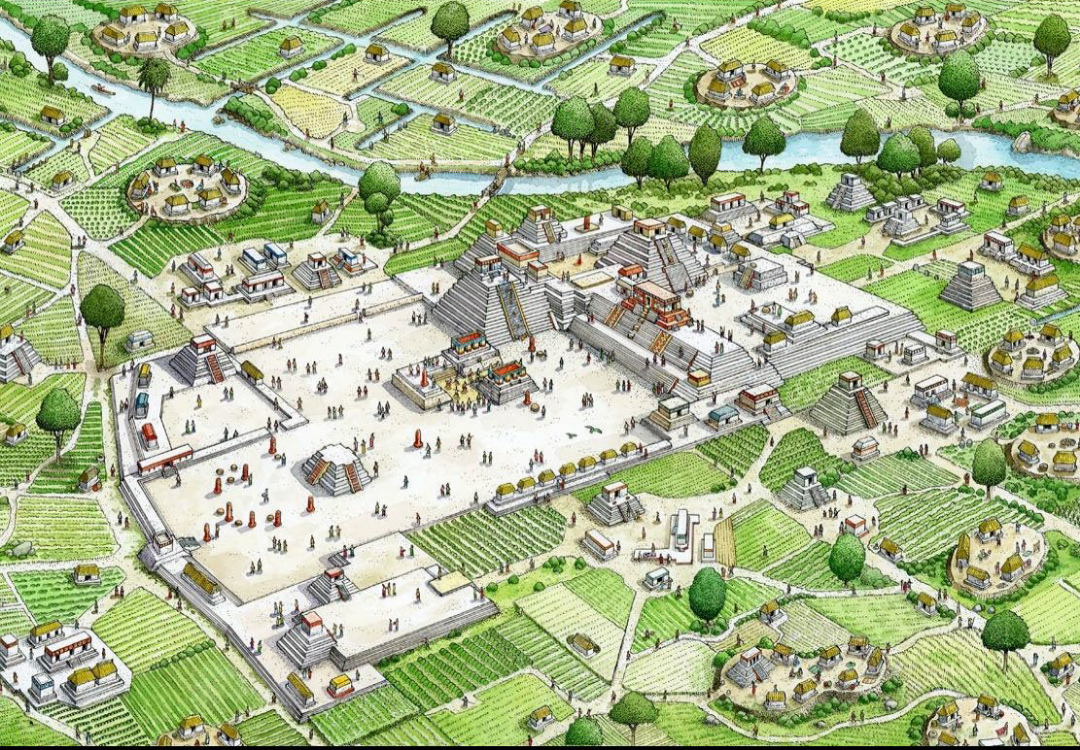
World of stairs.
Probably wouldn’t be that neat and tidy outside the main square.
Why do you think so?
I’m genuinely curious - I have no idea as my knowledge of the Maya is almost nonexistent.
A supposition really. The Maya had an elite that used the peasants around them for work. In any poorish community, the drive for neat and tidy falls way down the list of priorities.
This reminds me of something I heard when I was a kid. It was something like: “We’re not poor, we just don’t have a lot of money. The difference is, we take good care of what we’ve got.”
But also in subsistence-level lifestyles, very little is wasted. In the Old World, for example, even human dung was used as a binder for walls in rural areas.
‘Neatness’, thus, in a low-trash generation environment, is more a function of good design than good living. If everything is dirt and mud, having it arranged in the right way is the difference between looking like a European peasant hovel falling apart, and looking like a half-decent place to live.
My knowledge of the Maya is pretty sparse, but I would imagine that settlements like these were dominated by an elite which wished for the prestige of a nice-looking town to compete with other city-states’ elites (and also could provide access to the labor specialization and materials needed for a well-designed town instead of some local hamlet). If you will forgive my obsession with Rome, the Romans did something similar, consciously putting more effort into the residential construction of coloniae (typically established by the elite rather than organically developing) which were built near where rivals could see them.