- 10 Posts
- 20 Comments
WERA has fantastic high-quality tools specifically for bicycles.




 21·6 days ago
That would require to create a lot of new jobs for scientists coming from there. Otherwise it would just increase competition for unattractive jobs and lead more people to quit science (which I did).
And speaking of MINT professionals, we have a lot of stupid processes and bad working conditions here. Yes, for example in German industrial engineering, a lot of experienced software developers are sought for - but honestly, most managers do not have an idea what a requirement specification or an API really is. If you don’t believe me, ask for the API docs of the thing you should work on in their interview.
 3·6 days ago
Die oebb.at Webseite (wo man alle DB Fahrkarten normal buchen kann) oder für den schmaleren Groschen Flixbus sind doch auch Optionen. Oebb hat sogar öfter mal sehr günstige Liegewagentickets…
Ich habe meine Bahncard seit 25 Jahren, das ging immer per Lastschrift - jetzt aber nicht mehr, die “Verifizierung” per Verimi wird verlangt.
Das mache ich nicht, weil ich keine Möglichkeit habe, den tatsächlichen Umfang des Kontozugriffs zu überprüfen oder zu beschränken.
Kreditkarte geht auch nicht …
Paypal gehört einem gewissen Peter Thiel falls dir der Name was sagt. Mit dessen Firmen mach ich keine Geschäfte.
Obwohl es eine altbackene 1-Cent Überweisung ja auch tun würde, von mir aus könnte ich den Cent noch mit Bahncardnummer zurück überweisen.
Na dann halt nicht da buche ich halt unkompliziert Bahncard-Flexpreis bei https://oebb.at/, ist sowieso die bei weitem freundlichere und unkompliziertere Webseite.
Am Automaten gibt es noch Flexpreis, für Bahncard aber angeblich begrenzt (was bei der Oebb Webseite erstaunlicherweise nie ein Problem ist).
Oder wenn’s billiger sein soll halt Flixbus.
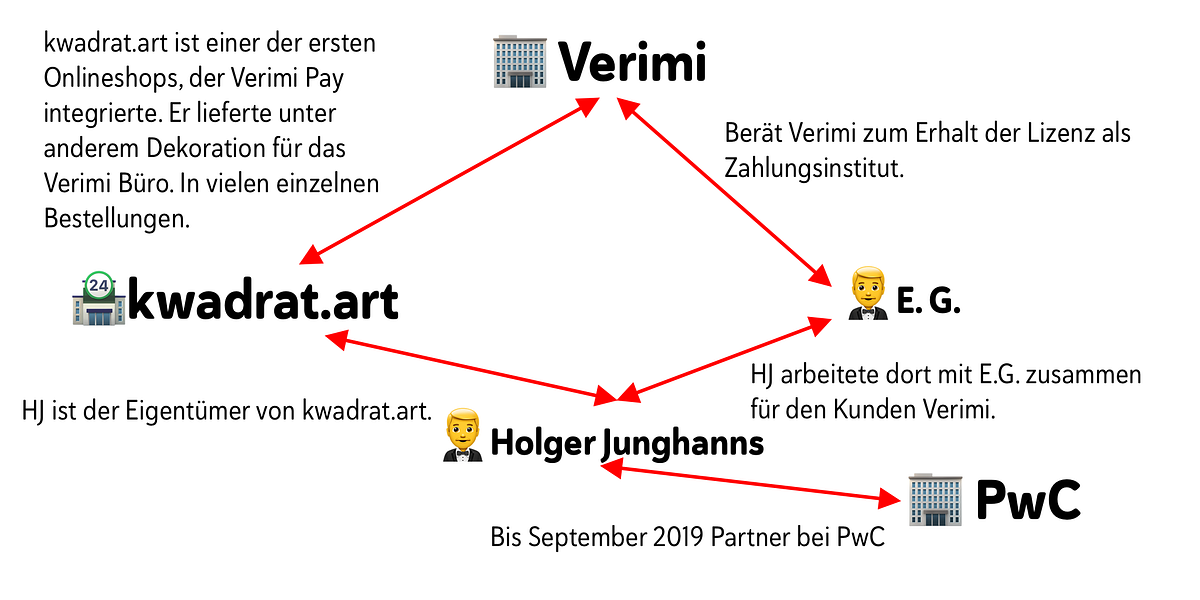
Verimi ist derDienstleister, den zwingend Kunden der Deutschen Bahn akzeptieren müssen, wenn sie “Supersparpreis” Ermäßigungsangebote der Deutschen Bahn kaufen wollen - diese gibt es nur noch online oder per App.
Verimi hat dabei das erkläre Ziel, die Identitäten der Kunden zu einer einzigen digitalen Identität zusammenzuführen - im Prinzip also so was wie ein Personalausweis fürs Web. Dies aber ist nicht von der GDPR gedeckt, das fusionieren von Kundendaten zum Zweck von Tracking benötigt die freiwillige ausdrückliche Zustimmung des Nutzers bzw Kunden.
 1·6 days ago
I use OpenStreetMap.org on the PC, it has info about shops.
OSMand on the smartphone.
And brouter.web for planning bike commutes.
Ich denke, Yanis Varoufakis schreibt hier eine in sich sehr logische und schlüssige Darstellung, was Trumps Motivationen, Überlegungen und Ziele sein könnten. Wobei ich denke, dass zumindest eine Teilabsicht auch ist, die EU zu spalten.
Ich denke auch dass es richtig ist, dass Trump einflussreiche Unterstützer hat unter den extrem reichen Amerikanern.
Aber ein stark autoritäres Element ist da auf jeden Fall dabei und die EU hat bisher recht gut Geschlossenheit bewahrt.
Ich halte es auch für möglich, dass sich Allianzen bilden aufgrund von Interessen, die Trump nicht einbezieht. Sicher ist China eine Art Systemkonkurrent zur EU. Aber beide Blöcke haben, beispielsweise, auch ein vitales Eigeninteresse an Maßnahmen gegen die Klimakrise - die EU weil zunehmend die Mittelmeer-Anrainerstaaten, und neuerdings auch Südosteuropa durch Extremwetter geschädigt werden und dies auch immer schneller zu einem wirtschaftlichen Faktor wird. Und die Tendenz gibt es auch in China, wobei noch hinzukommt dass Städte wie Bejing inzwischen auch real von gefährlichen Hitzewellen betroffen sind. Die chinesische Regierung könnte zu dem Schluss kommen, dass dies mittelfristig eine größere Bedrohung für die Stabilität ist als die Demokratie in der EU.
Ähnlich sind auch Allianzen zwischen anderen Südostasiatischen Staaten und der EU möglich.
Yes. The Brexiters argued that they would be better off without an agreement with the Europesn Union on future trade policy and sgreements, seeing a “No-Deal-Brexit” as leverage which left the UK free to make more advantageous trade agreements with other countries.
Years later, not a single agreement has materialized which could even remotely make up for the lost trade with the European Union.
And, ironically, business sectors which thougth that they would profit from Brexit like fishing companies or farmers, suffered the most because they were completely unaware how much advantage the collaboration within the EU was giving them.

Actually, the EU has a whole bouquet of options for countries that want to cooperate with it. It can be trade agreements, free trade area, currency union, Schengen Area and so on. Norway, Switzerland and Turkey are examples of different degrees of associated status.
But be aware that any full EU membership would non-negotiable include the right of not only companies but also people to move freely in the common area - yes, that would mean that any EU citizen has the right to move to and live in Canada, and vice versa, as long as these persons can support themselves.
Causing economic chaos and sudden large job losses in Germany is surely a way to help Gwrmanys extreme right-wing party AfD. I wouldn’t advise to under-estimate that danger.
Especially since the still-forming social-democrat/conservative coalition is surprisingly quiet on the rise of far-right practices in the US. Being distrustful, one could think that would-be chancellor Merz wants more to govern with the AfD - which, make no mistake, would probably be at least as bad as Trump.
Hubert names a few big projects where Europe has done great things. Another one which I think is well worth mentioning is large numerical weather models.
If you sometimes track hurricanes in Carribean waters, you probably know that they do as least as well as - often better than- the US models. The current anti-science politics in the US leaves people alone not only on climate change as the cause of more frequent disasters, but also in the disaster itself, withdrawing science-based warnings and advice, civil protection, and emergency help.
In such a situation, our weather models could save many lives directly.
People just don’t realize how much power of abuse all this data provides in evil hands. Take smart phone location data. Some time ago, there was an uproar when the move-fast-break-laws company Uber published an analysis of how many of their clients in New York City had probably a one-night stand - based on their location data. A breach of privacy, sure.
But think about this: Google is collecting all this location data all the time, and storing it permanently. Finding out who is probably having an affair while their spouse is away on a business trip is essentially a database query for them.
Or another thing: It is well known that the animal most dangerous to single humans is other humans hunting them. The unspeakable hunt on Europes Jews is an example from hell but depressingly, there are many more cases in human history, like the witch hunts or the catholic inquisition.
Now, if things got too hot, people had the last resort to flee and simply disappear, going to a safe place where nobody knows them. That was the thing that saved Salman Rushdi when he had to flee Iran.
But in an ultra-connected world without privacy, this is not possible any more. That’s because companies like Facebook, Twitter/X and Google have your social graph including your family. And even if you would never would give these companies your address in Rushdie’s situation, a family member who has your address on the phone would happily upload his or her whole address book to Facebook or Google.
That’s not a theoretical consideration - being ratted out by social media was the way many people in Syrias civil war (fuelled by Russia) died.
Cyprus, Luxemburg and Malts, as they provide services to the US market
That’s a nice way to say “tax havens”. Also, many US Big Tech companies have headquarters in Ireland and would pay taxes there … if only these dirt poor companies would have any revenue…
SURPRISE, that is EXACTLY the same thing that the Brexiters wanted! How come?
(And look at how it’s going…)
Citing from Bert Hubert’s article:
Acknowledging painful changes is not easy. In the 1930s, the Netherlands realized the world was becoming pretty dangerous, and therefore planned to buy weapons and ammunition from Germany (!). However, the ordered weaponry was not delivered on time, or at least not in the way you’d want.
I love his clarity (and humor) combined with an incredible will to make things better - and fierce optimism that we can, really.

One thing I am thinking is that things whith such streng network effects like telephone networks, railway networks, messenger applications or the basic protocols of social media should be required to use specified, open standards and protocols, just like IMAP, HTTP or the Matrix protocol. (Actually the Gemini protocol is a good example how it can be done for microblogs).
 1·7 days ago
Und ach ja, wenn du eine öffentlich erreichbare IP (auch ungenau statische IP genannt) von deinen Internetprovider bekommst, musst du nur einen Namen für den Server bei einem DynDNS Provider registrieren und die aktuelle IP dort mit einem script / Systemdienst updaten. Die Fritzbox muss dann den Gemini-Port - und nur den - auf den Raspberry Pi forwarden.
Für einen optionalen Login von aussen per SSH brauchst du sehr starke Passwörter, sonst würde dein Server schnell gehackt.
Hier als Beispiel noch die Gemini-Präsenz der taz über einen HTTP-Gateway, den man mit einem normalen Browser aufrufen kann:
Ich habe einen Alternativvorschlag. Nämlich, die Sache zu vereinfachen, indem man statt einem HTTP Server das viel einfachere (und sicherere) Gemini-Protokoll benutzt. Was das ist erkläre ich gleich.
Warum? Einen Webserver wie Apache oder Nginx aufzusetzen und zu pflegen ist relativ komplex. Das macht Arbeit, und da man den laufend updaten muss, ist das auch immer wieder Arbeit. (Es gibt auch einfachere Server wie diesen aber einfach ist da echt relativ…)
Dazu muss man die Webseiten, wenn man einfache statische Webseiten verwendet, als HTML generieren. Dazu gibt es Blog-Generatoren, so etwas wird viel benutzt und ist sicher möglich. Aber es ist halt komplex.
Ausserdem kosten extern gehostete Server Geld, und wenn man sie zu Hause hostet, kosten sie zumindest Strom. Für ein Gerät, das dauernd läuft, kommen da schon ein paar Euro zusammen.
Eine erheblich einfachere Alternative ist wie folgt:
- Statt HTTP benutzt man das Gemini-Protokoll, wie hier beschrieben. Hier ist die Homepage im Gemini-Netz. Wie man sieht, kann man Gemini-Seiten ganz einfach über einen HTTP-Gateway wie oben aufrufen. Oder eben mit einem extra Client wie z.B. deedum (Android) oder Amfora (Linux). Wenn man mal probieren will, wie sich das liest - die Gemini-Homepage der taz Berlin ist gemini://taz.de . Es ist im Vergleich zum modernen Web frugal, aber sehr lesefreundlich!
Festhalten muss man, dass dieses Gemini nichts mit anderen Dingen der Internetkonzerne zu tun hat, die auch Gemini heißen, also weder mit Googles “KI” noch mit einem Chatbot. Es ist benannt nach dem Vorläufer des Apollo-Programms der NASA, und technisch gesehen ein Nachfolger von Gopher und eine Vereinfachung des auf HTML basierenden originalen World Wide Web.
Konkret geht das wie folgt:
- Man richtet einen Raspberry Pi mit Debian ein
- Den hängt man z.B. an die Fritzbox. Die Stromversorgung geht dann über den USB Anschluss der FritzBox, das kostet nur so 1 Watt.
- Damit der Server-Port von außen erreichbar ist, muss man beim ISP typischweise ine feste IPv4 IP schalten (kostet 5 Euro im Monat).
- auf der Fritzbox / dem eigenen Interenetrouter richtet man eine Portweiterleitung ein.
Soweit ist das jetzt nicht unterschiedlich von einem kleinem HTTP Server. Der entscheidende Punkt ist nun:
- Statt einem HTTP Server richtet man einen robusten Server für das Gemini-Protokoll ein. Das ist ein stark vereinfachtes Hypertext-Protokoll, das statt HTML eine sehr einfache Syntax hat und auf simple Webseiten mit Text, Bildern und Medien optimiert ist.
Hier ist die Wiki-Seite zum Gemini-Protokoll.
Ein einfacher Webserver, der in Rust geschrieben ist, ist Agate. Hier ist die Github-Seite, und hier ist die Gemini-Homepage davon.
Den Server kann man aus Rust auf dem Raspberry compilieren, wenn man Rust mit rustup installiert. Er ist nicht so komplex, daher ist es nicht nötig, den auf einem anderen Computer zu bauen.
Da das Gemini-Protokoll nahezu keine bewegliche Teile hat und nur statische Seiten ausliefert, wird man da, wenn der Server auch noch in Rust geschrieben ist, nur selten Patches brauchen. Das wiederum spart einen Haufen Zeit. Zu konfigurieren gibt es auch nicht viel. Die gesparte Zeit kann man nutzen, um seine Seite zu schreiben. Gemini ist für alles Mögliche geeignet, als eine Art persönliches Wiki, als Microblog, als Blog mit Bildern und Medien, für vernetzten Hypertext oder Dokumentationen oder was auch immer. Dabei ist es sehr text-zentriert - es ist also ein Medium für Leute, die schreiben und lesen.
Dann muss man noch seine eigenen Seiten statt mit HTML im Gemini-Format erstellen. Das ist super easy! Man benutzt ein Markup-Format ähnlich wie das Wikipedia-Markup oder Markdown (das was hier bei lemmy genutzt wird). Hier ist eine ebenso vollständige wie kurze Beschreibung des Formats.
Erstellen und bearbeiten kann man die Webseiten mit einem Texteditor, wie z.B. Emacs oder vim. Die kann man dann per scp, Krusader oder WinSCP auf den Server kopieren oder mit einem Editor wie Emacs auch direkt auf dem Server bearbeiten.
Ich finde den Artikel ganz schön tendenziös:
Was ja Bullshit ist, weil Paris ja zeigt dass Rettungskräfte auf leereren Strassen ja sogar schneller zum Ziel kommen. Und natürlich gibt es Ausnahmegenehmigungen für Lieferverkehr
Weil ohne Auto können Menschen sich nicht mal kurze Distanzen fortbewegen ?
Und das Vogelgezwitscher soll den Leuten vorbehalten bleiben die sich ein Haus im Speckgürtel leisten können - das aber nicht selten mit Einsamkeit bezahlen, denn Vorstädte sind recht einsam?
Wo ist hier das Problem mit einer Mehrheitsentscheidung?
In der Stadt mit vermutlich dem besten und dichtesten ÖPNV-Netz in Deutschland?
Und was machen die Älteren, wenn sie nicht mehr sicher Auto fahren können? Gerade für Ältere ist ein besserer ÖPNV notwendig und ein Abbau des Verkehrs sicherer - und nicht jede/r der oder die in Rente geht, kann sich Kosten von z.B. 400 Euro im Monat für ein Auto leisten.
Bizarr, sich gegen eine höhere Lebensqualität zu wenden…